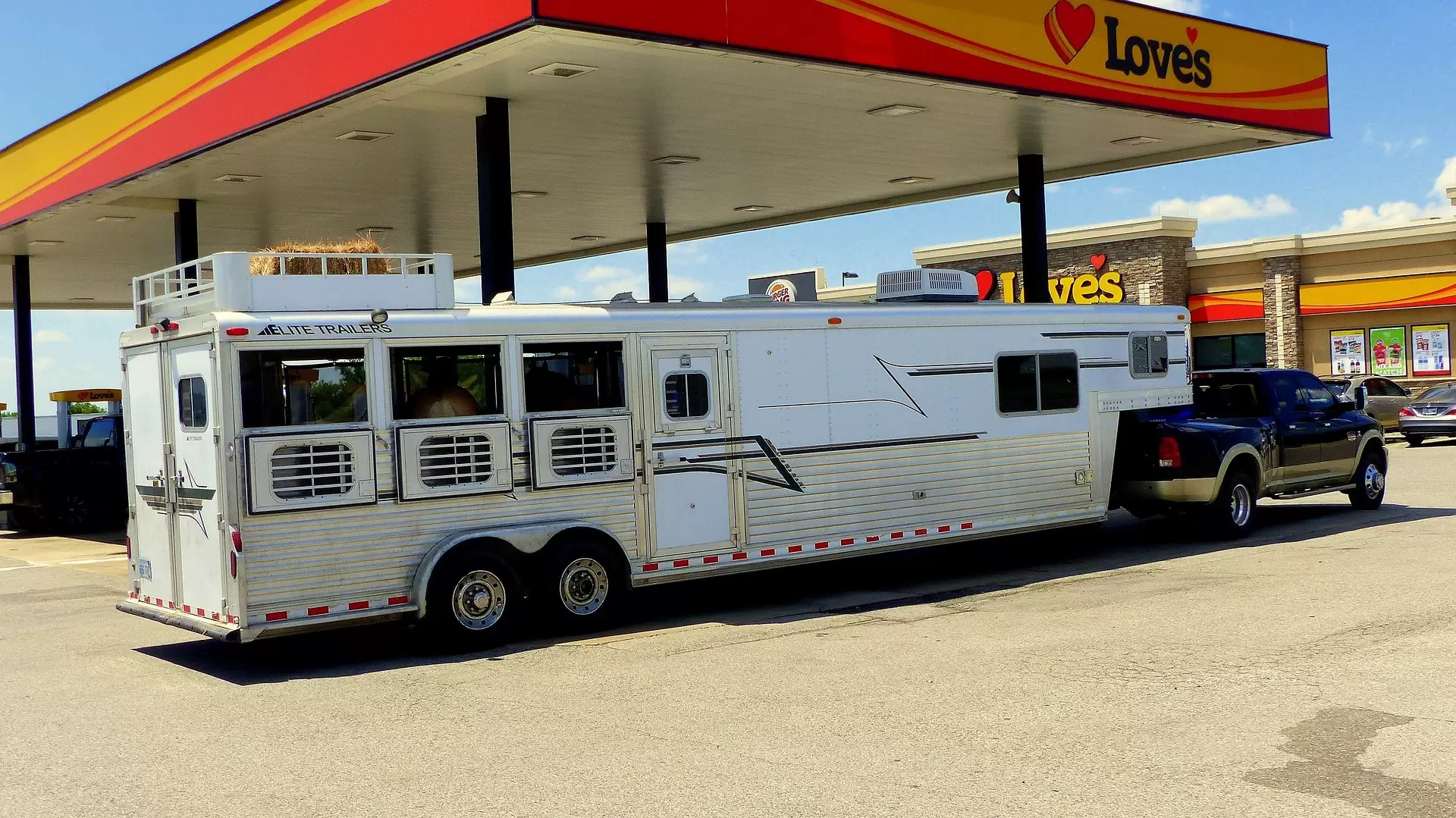
A horse float is a serious purchase that sits somewhere between a trailer and a caravan, and the finance follows the same pattern. A basic two-horse float is straightforward. A gooseneck with living quarters is a different conversation, closer to financing a caravan than a box trailer. Here is how it works.
What gets financed
- Straight load floats, typically two-horse, the most common starting point
- Angle load floats, two, three or more horses
- Gooseneck and fifth-wheel floats, which need a suitable tow vehicle
- Floats with living quarters, kitchenette, bunk and bathroom fit-outs
- Stock crates and combination trailers used for horses and general farm work
For work and commercial trailers our guide to trailer finance covers that side, and for towed leisure vehicles our caravan finance page is the closer comparison on the larger floats.
Secured or unsecured
Most horse floats are financed as a secured loan against the float itself, with the lender registering an interest over it. Floats hold value reasonably well, they carry a VIN, and there is an active second-hand market, all of which makes them sound security. Our guide to secured car loans explains how security works and the same principles apply.
Smaller or older floats sometimes fall below a lender's minimum finance amount, which is the most common obstacle in this category and has nothing to do with your credit. Where that happens, an unsecured personal loan is often the practical route instead.
Ready to get started?
Book a chat with an Asset Finance Broker at Treadgold Finance today.
Living quarters change the assessment
A float with a fit-out is worth considerably more than a plain one, and lenders treat it accordingly. Two points worth knowing.
A factory-built living quarters float from a recognised manufacturer, with the fit-out on the original build, is valued as one asset and financed like any other float.
An owner-added fit-out is harder. If the float was built plain and the kitchenette, bunk or bathroom went in afterwards, the lender may value the float as it was originally built, and the money spent on the interior may not count toward the value. Documentation from a recognised builder makes the difference, which is the same pattern as camper conversions on our motorhome and campervan finance page.
Towing, before you buy
Worth settling before you commit rather than after. Check the float's loaded weight, horses and gear included, against your vehicle's towing capacity and the combination limits, not the empty tare. Horses are heavy and they move, which is why float towing is less forgiving than towing a caravan of similar weight.
Goosenecks in particular need a suitable tow vehicle with a tray and hitch, and that is often a second purchase. Where a new tow vehicle is part of the plan, our ute and 4x4 finance page covers that side and the two purchases can sometimes be arranged together.
Buying used
Used floats are financed routinely. What lenders look at:
- Age, with the maximum applying at the end of the loan term rather than the start, so an older float usually means a shorter maximum term
- Condition of the floor and the chassis, which is what matters structurally and what buyers most often overlook
- Brand and resale market, since a well-known manufacturer is easier to value and resell
- Registration status, because an unregistered float is harder security
On a private sale, search the Personal Property Securities Register against the float's VIN before you pay, at ppsr.gov.au. Floats are commonly financed, and if money is owing and is not paid out at settlement, the lender's interest follows the float to you. Where the purchase is financed, the lender verifies the seller owns it and pays them directly, which protects both sides. Our guide to buying privately with finance sets out the process.
Business use
If the float is used in a business, whether that is a riding school, a breeding operation, agistment or competition as a registered enterprise, it can be financed commercially rather than as a consumer purchase. That usually means a chattel mortgage, with the deductions and GST treatment that come with it. Our guide to business vehicle tax deductions covers the general treatment and how your business structure affects finance covers who borrows and who signs. Confirm the position with your accountant.
Where the operation is a farm or primary production business, our guide to farm machinery and equipment finance covers how lenders read seasonal income.
Where a broker fits
The two things that decide a horse float deal are the amount and whether the float is plain or fitted out, and lender appetite varies on both. Knowing which lenders write smaller amounts, and which will value a living quarters fit-out properly, saves an application that was never going to be approved. Our personal loans page sets out what we arrange, Australia-wide.
This article is general information only and is not financial, tax or legal advice. Registration and towing requirements are set by each state and territory. Lender criteria vary and change.
Damo Treadgold is the director of Treadgold Finance, an FBAA-accredited finance broker on the Sunshine Coast, arranging vehicle, trailer, caravan and equipment finance Australia-wide.
Frequently Asked Questions
Can you finance a horse float?
Yes. Most floats are financed as a secured loan against the float itself, which carries a VIN and holds value reasonably well. Smaller or older floats sometimes suit an unsecured personal loan instead.
Can I finance a float with living quarters?
Yes. A factory-built living quarters float is valued and financed as one asset. An owner-added fit-out is harder, because the lender may value the float as originally built and the interior work may not count toward the value.
Is there a minimum amount for horse float finance?
Many lenders set a minimum finance amount and a smaller or older float can fall below it. It is the most common obstacle in this category and it is not a credit issue.
Can I finance a used horse float?
Yes. Lenders assess age, condition, brand and registration status. The maximum age applies at the end of the loan term, so an older float usually means a shorter maximum term rather than a refusal.
What should I check before buying privately?
Search the Personal Property Securities Register against the float's VIN before you pay. Floats are commonly financed, and if money owing is not paid out at settlement the lender's interest follows the float to you. Check the floor and chassis condition too.
Can I finance a float through my business?
If the float is used in a business such as a riding school, breeding or agistment operation, it can usually be financed commercially, often as a chattel mortgage, with the GST and depreciation treatment that comes with it. Confirm with your accountant.