Forklifts sit in an unusual spot. They’re expensive enough to need finance, they run hard, they need regular servicing to stay compliant, and there’s a deep rental market that makes not owning one a serious option. That’s why “should I buy or rent” is a real question here in a way it isn’t for most equipment. Here’s how forklift finance and leasing work in Australia.
Buy or rent: the genuine question
In most equipment categories ownership wins over the long run. Materials handling is the exception worth thinking about, because full-maintenance rental is standard in this market: the monthly payment covers the machine, the servicing, and often the breakdown cover, and the provider carries the risk of it failing.
Renting tends to suit seasonal peaks, short-term contracts, sites where downtime is expensive, and operations without their own maintenance capability.
Owning tends to suit steady year-round use, businesses with a workshop or a service arrangement, and anyone who wants the asset on the books rather than an ongoing expense.
The honest comparison isn’t the repayment against the rental. It’s the repayment plus servicing, tyres, repairs and downtime against the rental. Run it that way and the answer is often less obvious than either the dealer or the rental company suggests.
The finance structures
Chattel mortgage for a machine you intend to keep: you own it from day one, the lender registers a security interest over it. See chattel mortgages explained.
Finance lease and hire purchase where ownership timing or the tax treatment suits better; see finance lease versus hire purchase.
Operating lease or full-maintenance rental, where you pay for use and hand the machine back at the end. Common in this category for the reasons above.
The structure changes who owns the machine and how the payments are treated, so it’s a decision to make with your accountant before the paperwork is drawn.
Ready to get started?
Book a chat with an Asset Finance Broker at Treadgold Finance today.
Electric, LPG or diesel
The fleet is shifting to electric, and it changes the finance conversation slightly:
- Electric machines suit indoor work and have lower running costs, but the purchase price is higher and the battery is a significant part of the machine’s value. Lithium units cost more again and last longer.
- LPG remains common for mixed indoor and outdoor use.
- Diesel dominates yards, timber, and rough terrain.
Two practical points. Batteries and chargers can usually be financed with the machine, and should be included in the same facility rather than bought separately afterwards. Charging infrastructure is a different matter: switchboard upgrades and installation are attached to the building, have no resale value, and are generally not financeable as equipment. If a fleet conversion involves electrical work, budget for that separately, the same way a practice separates fitout from equipment.
Ex-rental and used machines
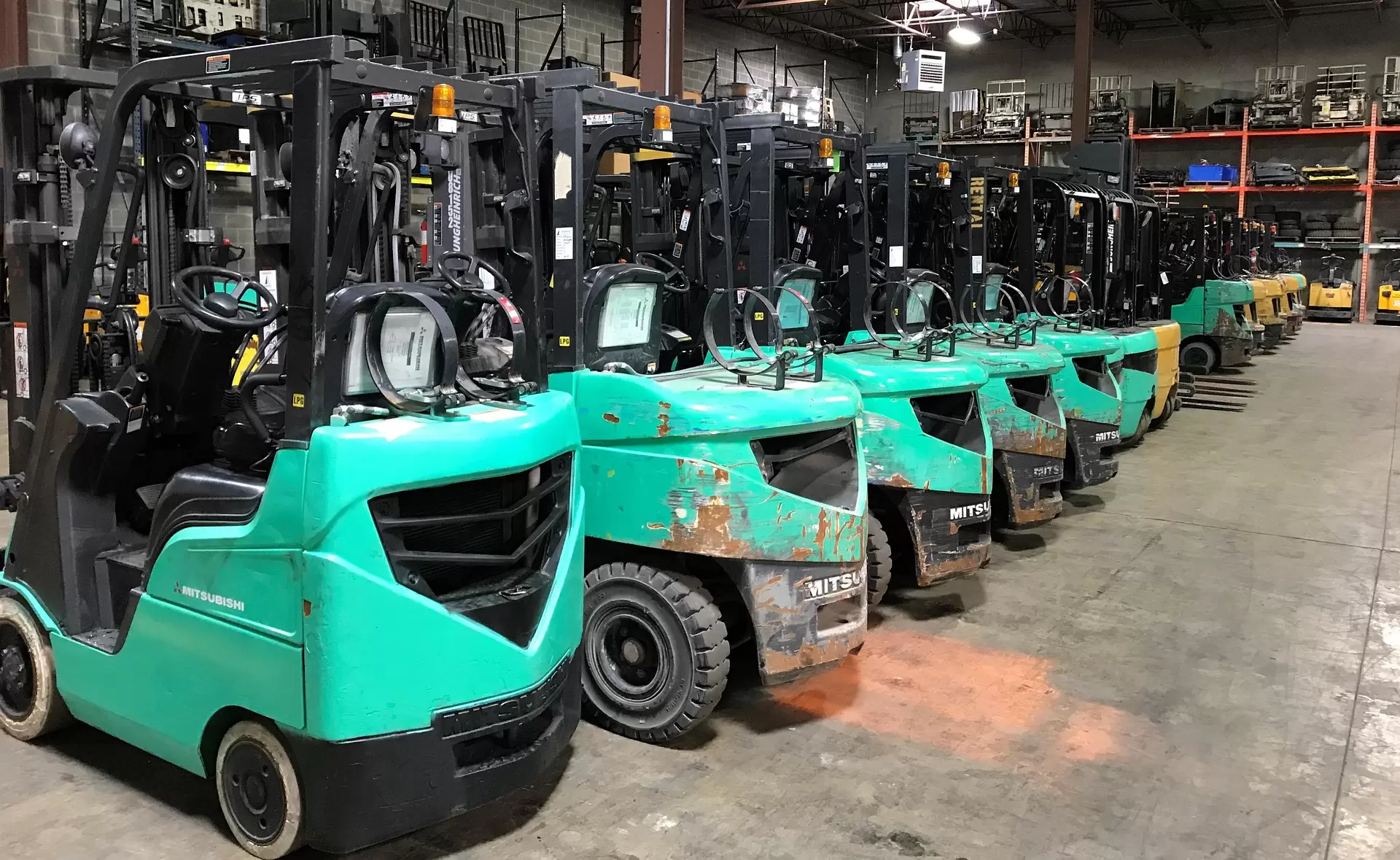
Materials handling has an unusually deep used market, because rental fleets turn over constantly. Ex-fleet forklifts are often well serviced with complete records, and they’re financed routinely.
Lenders assess:
- Hours, and whether they match the age
- Service history, which in this category is usually documented because compliance requires it
- Brand and parts availability, since resale is the lender’s protection
- Condition of the mast, forks and tyres
An older machine usually means a shorter maximum term rather than a decline.
Attachments and multiple units
Rotators, clamps, jibs, slippers and fork extensions can generally be financed with the machine. Include them at the start rather than seeking a second approval later.
If you’re putting on several machines at once, say so early. Financing a small fleet in one facility is usually cleaner than several separate agreements with different terms and end dates, and it gives the lender a clearer picture of what you’re doing.
What lenders assess
- The business: time trading, ABN and GST registration, industry
- Serviceability, from financials, BAS or bank statements
- The machine as security: type, hours, age, brand, resale market
- Credit history, with directors’ guarantees standard on commercial lending
- The finance amount, since a small used forklift can fall below some lenders’ minimums
If you can’t provide full financials, low doc business loans are assessed on bank statements, BAS or an accountant’s declaration instead; who qualifies for a low doc business loan sets out the criteria.
Buying privately
If you’re buying from another business rather than a dealer, search the Personal Property Securities Register against the machine’s serial number to confirm nothing is owing on it. The register covers plant and materials handling equipment as well as vehicles, and any existing finance is paid out at settlement. You can search the register yourself at ppsr.gov.au.
The tax side
A forklift bought for business use generally attracts deductions for depreciation and for the interest component of the finance, and in some years an immediate write-off applies to eligible assets under a threshold, tested against the machine’s total cost. Rental and operating lease payments are treated differently again, which is part of the buy-versus-rent calculation. We’ve explained the write-off mechanism in how the instant asset write-off works. Confirm with your accountant.
Where a broker fits
Two things decide these deals: whether the structure matches how you’ll actually use the machine, and whether the lender will write the amount involved on a used unit. Both are worth settling before you apply. Our equipment finance page sets out what we arrange, and machinery finance covers heavier industrial machinery.
This article is general information only and is not financial, tax or legal advice. Lender criteria vary and change; confirm the tax treatment of any purchase or rental with your accountant.
Damo Treadgold is the director of Treadgold Finance, an FBAA-accredited finance broker on the Sunshine Coast, arranging equipment, machinery, vehicle and business finance Australia-wide.
Frequently Asked Questions
Can you finance a forklift?
Yes. Forklifts are financed as a chattel mortgage, finance lease, hire purchase, operating lease or full-maintenance rental, secured against the machine.
Is it better to lease or buy a forklift?
It depends on use. Rental suits seasonal peaks, short contracts and operations without maintenance capability. Ownership suits steady year-round use. Compare the repayment plus servicing, tyres, repairs and downtime against the rental, not the repayment alone.
Can I finance an ex-rental forklift?
Yes, and they’re common. Rental fleets turn over constantly, so ex-fleet machines are usually well serviced with complete records, which makes them straightforward security.
Can batteries and chargers be financed?
Usually yes, with the machine, and they should be in the same facility. Charging infrastructure such as switchboard upgrades is attached to the building and generally is not financeable as equipment.
Do hours matter on a forklift?
Yes. Lenders look at hours against age, service history, and the condition of the mast, forks and tyres. Older machines usually attract a shorter maximum term.
Can I finance several forklifts at once?
Yes, and one facility for the group is usually cleaner than separate agreements with different terms and end dates. Mention the full requirement at the start.