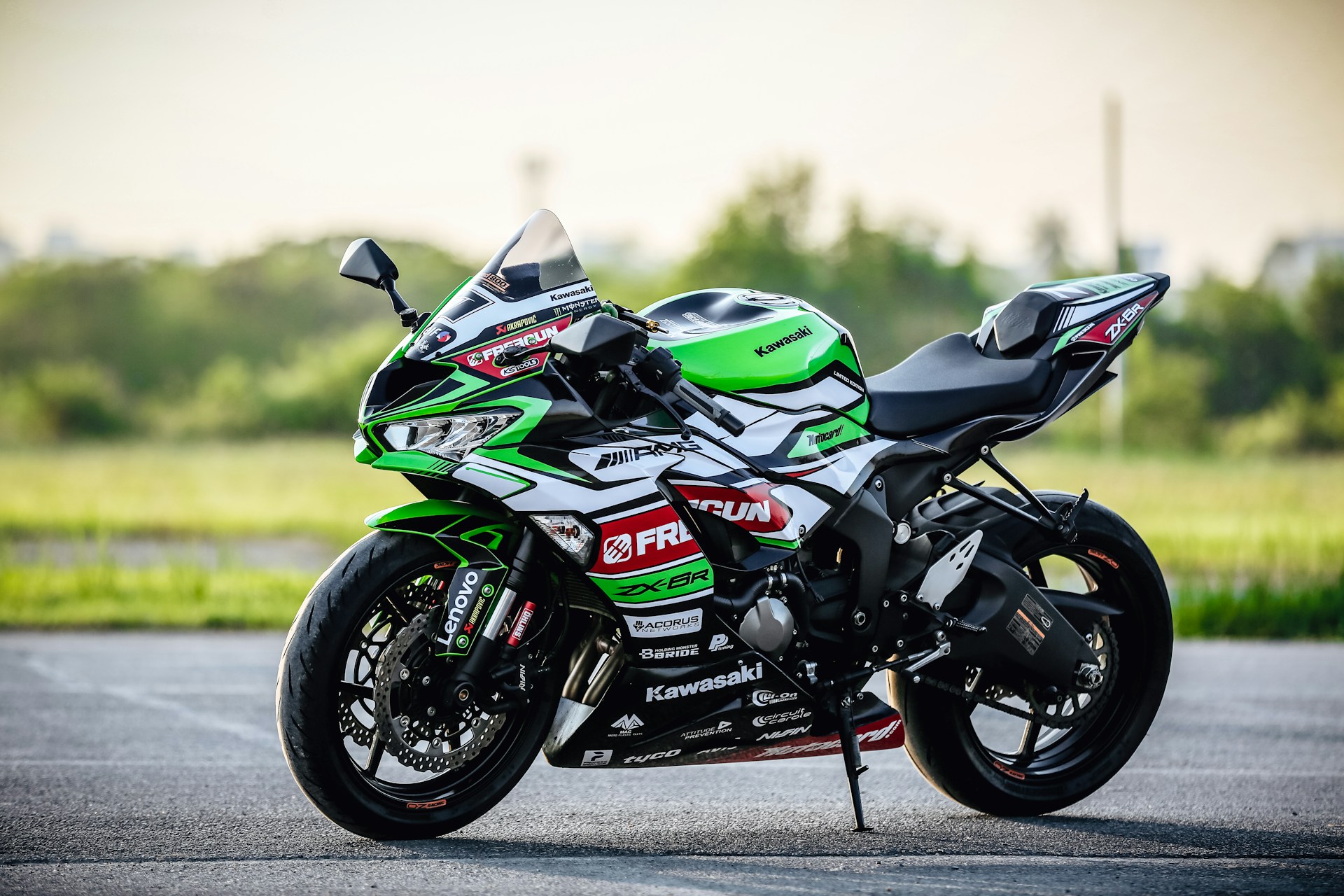
You've found the bike. Maybe it's the cruiser you've been eyeing for a decade, maybe it's a sportbike you weren't quite expecting to fall for, maybe it's the first commuter that'll actually get you off the M1 every morning. Whatever it is, financing it shouldn't be the hard part.
Motorbike finance in Australia works a little differently from car finance. The lender pool is narrower, pricing varies more, and a few lenders won't touch certain bike categories at all. Knowing how the market actually works before you walk into a dealership puts you in a much stronger negotiating position, and usually means a better deal over the life of the loan.
This guide walks through how motorbike finance works, what your real options are, what affects your rate, and the common traps people fall into. By the end you'll know exactly what to ask for and what to skip.
How motorbike finance works in Australia
Motorbike finance is a loan secured against the bike itself, meaning the bike is the security on the loan. If you stop making payments, the lender can repossess and sell it to recover what's owed. This is the same structure as standard car finance, which is why most asset finance brokers handle both. Our guide to secured car loans explains how security works and why it matters to what you're offered.
Loan terms typically run from one to seven years. Rates sit in a wider band than car finance, varying meaningfully depending on credit profile, bike age, and lender. The lender assesses three main things: who you are (credit history, income stability), what the bike is (age, value, type, resale market), and how the deal is structured (deposit, term, balloon).
The Australian motorbike finance market is dominated by a handful of specialist lenders plus the major banks. Each has its own appetite. One might love road bikes and refuse off-road, another might prefer riders with several years of licence history, another might be sharper on new bikes but uncompetitive on used. That's why direct-to-bank approaches often leave money on the table.
The minimum loan amount, and why it catches riders out
Here's the constraint riders hit most often, and it has nothing to do with credit.
Many lenders set a minimum finance amount, and plenty of good used bikes sit below it. The problem isn't whether you qualify; it's whether the lender will write a loan that small at all. Fewer lenders play at the lower end, and those that do have their own criteria.
Three practical responses: check before you commit to a particular bike, consider whether gear and on-road costs belong in the same loan (see below), or accept that a small purchase may suit an unsecured personal loan rather than a secured bike loan. It's the single most common reason a straightforward-looking bike deal stalls.
Types of motorbike finance available
Secured consumer loan
The most common path for private bike purchases. Fixed rate, fixed term, fixed repayment. The bike is the security. Terms one to seven years. Used by anyone buying a bike for personal use.
This is what most riders end up on. Predictable, no surprises, no balloon at the end. You own the bike outright once the final payment clears.
Chattel mortgage (for business use)
If the bike is used for business purposes such as delivery work, courier services, or mobile trade work, a chattel mortgage gives you the bike as a business asset on day one. You can claim the GST upfront if you're GST registered, depreciate the asset, and deduct the interest portion of each repayment as a business expense. Our guide to chattel mortgages covers the structure in full, and business vehicle tax deductions covers the general tax treatment.
This is the more tax-effective structure for ABN holders using the bike for income-generating work. Worth running the numbers with your accountant before deciding between chattel mortgage and consumer loan.
Unsecured personal loan
Occasionally the right call for very low-value used bikes where the cost of valuation and security registration outweighs the benefit, or for bikes too old to qualify for a secured loan.
Novated lease (rarely)
Some salary-packaging providers do offer novated leases on motorbikes, but most don't. If you're employed and your employer offers salary packaging, it's worth asking, but expect a narrower panel than for cars. Our guide to how a novated lease works explains the structure if you want to understand it before asking.
Bike age: the limit applies at the end of the term
Worth understanding properly, because it surprises people. Lenders set a maximum bike age at the end of the loan term, not at the start. A bike that's financeable today over three years may not be financeable over five, because of what it will be worth at the end.
The practical effect is that an older bike usually means a shorter maximum term rather than a flat refusal, and a shorter term means higher repayments. If you're looking at an older bike, check this first; it shapes everything else. Very old bikes fall outside secured lending altogether and move to the unsecured path above.
What affects your rate
Rather than quoting numbers that change with the market, here's what actually moves your rate:
Your credit profile. Credit history, repayment history, and current debt levels are the biggest single factor for most lenders. Our guide to your credit file explains what they actually see.
The bike itself. Age, value, brand resale demand, and category (road, sport, cruiser, off-road) all affect how lenders price the loan. A bike with strong resale demand is easier to place than an obscure model.
Loan term. Shorter terms usually carry lower rates; longer terms carry higher rates but lower repayments. Our guide to how car loan interest rates work explains the mechanics, which are the same for bikes.
Deposit. A larger deposit reduces the loan-to-value ratio and often improves what's available.
Employment type. Full-time employees, ABN holders with consistent income, and self-employed applicants are assessed differently by each lender.
Comparison rate versus interest rate. The comparison rate is the number that matters when comparing options, because it bundles the interest rate plus most fees into a single annual percentage. A loan with a low headline rate but high fees can carry a meaningfully higher comparison rate. Our guide to comparison rates explains how to read one.
We compare options across more than 40 lenders to find a competitive comparison rate for your specific situation.
Learner and LAMS bikes
First bikes are one of the most common finance requests, and they carry two hurdles at once: the amount is usually small, and a newer rider often has a thinner credit file and a shorter employment history.
What helps is a stable income, time in the same job, a clean file, and a deposit if you can manage one. A guarantor is sometimes an option depending on the lender. It also helps to have the specific bike identified rather than seeking approval in the abstract, because the lender is assessing the security as well as you. If you want to know your budget before you shop, our guide to pre-approval explains how that works.
Gear, accessories and on-road costs
Helmet, jacket, boots, gloves, panniers, screen, exhaust. On a first bike, the gear can be a serious share of the outlay, and it's often overlooked in the budget.
Accessories and on-road costs can generally be included in the finance where they appear on the dealer's invoice as part of the purchase. Buy them separately afterwards from a different shop and they usually can't be added later. If you want them financed, have them quoted on the same invoice from the start. That's also one way a purchase clears a lender's minimum amount.
Buying privately
Bikes change hands privately more than most vehicles. Two things matter.
Check the register before you pay. Search the Personal Property Securities Register against the bike's VIN at ppsr.gov.au. It takes minutes and costs very little. If money is owing on the bike, the lender's interest survives the sale and follows the bike to you unless it's paid out at settlement.
The lender pays the seller. On a financed private purchase, the lender settles directly with the seller once the checks are done, which protects both sides. You're not handing a stranger a large sum and hoping. The process is the same as for a car, and we've set it out in buying a car privately with finance.
Registration and compliance matter. An unregistered bike, or an import without compliance, is harder to finance because the security is harder to value and resell.
What you'll need to apply
Most lenders want the same core information regardless of bike type:
- Driver's licence, and rider's licence where relevant to the bike category
- Two most recent payslips, or tax returns if self-employed
- Bank statements covering the last 90 days
- Details of the bike: make, model, year, VIN, and either the dealer invoice or a private seller's contract
- A deposit (not always required, but it helps)
For ABN holders or those buying through a business structure, add:
- ABN registration
- Trust deed or company documents if applicable
- Recent BAS
- A short statement of how the bike will be used in the business
Self-employed riders without current financials aren't shut out; low doc options are assessed on bank statements, BAS or an accountant's declaration instead.
The whole approval process for a straightforward deal, meaning full-time employed, good credit, and a mainstream bike, typically takes 24 to 48 hours from full application to formal approval.
Common pitfalls when financing a motorbike
A few things that catch riders out:
Settling for dealer finance without comparing. Dealerships have a finance desk because it's profitable for them, and their lender panel is usually narrower than a broker's. Dealer finance can still be competitive, particularly manufacturer offers on new bikes; the mistake is not comparing it. We've set out the general principle in dealer finance versus a broker or bank.
Mismatched loan term and ownership horizon. Financing a bike over seven years that you plan to upgrade in three means you're paying interest on depreciation you've already used up. Match the term to how long you'll actually keep the bike.
Ignoring the balloon trap. Some lenders offer attractive low repayments by setting a large balloon payment at the end. The monthly cash flow looks great, but if you can't refinance or pay the balloon at maturity, you're forced to sell the bike or take on a new loan to cover the residual. Our guide to balloon payments covers the trade-off honestly.
Choosing a lender that doesn't suit the bike category. Some lenders won't fund off-road bikes, learner-legal bikes under a certain capacity, imports, or modified bikes. Applying to the wrong lender wastes time and leaves a credit enquiry on your file that affects your next application. Apply once, to a lender that fits.
Not factoring in insurance. Bike insurance runs higher per dollar of value than car insurance, and comprehensive cover is usually mandatory under a finance agreement. Get the insurance quote before you commit to the bike, because it shifts the affordability picture.
How a finance broker helps
This is the part where you'd reasonably ask: why not just go to the bank?
You can. But a broker does three things a bank or dealership doesn't:
Compares the full lender panel in one application. A broker working with 40+ asset finance lenders can place your deal with whichever one suits your specific situation: credit profile, bike category, deposit amount.
Knows lender appetite from the inside. Not all lenders publish their underwriting rules. A broker who's placed hundreds of bike deals knows which lender to approach for an import versus a learner-legal commuter versus a 1980s classic. That reduces declined applications and the credit enquiry damage that comes with them.
Structures the deal correctly. Loan term, deposit, balloon, secured versus unsecured: small structural choices change your total cost significantly. A broker optimises for your situation, not for what's easiest for the lender.
Treadgold Finance is an asset finance brokerage based on the Sunshine Coast in Queensland, arranging motorbike finance Australia-wide. Our motorcycle finance page sets out what we arrange.
This article is general information only and is not financial, tax or legal advice. Lender criteria vary and change.
Frequently Asked Questions
Is there a minimum amount for motorbike finance?
Many lenders set a minimum finance amount, and a cheaper used bike can fall below it. It's the most common obstacle in bike finance and it isn't a credit issue. Check before committing to a particular bike.
Can I finance an older motorbike?
Often yes, but the maximum age applies at the end of the loan term, not the start. That usually means a shorter term rather than a refusal, and very old bikes move to unsecured lending instead.
Can I finance my first bike as a learner?
Often yes. Stable income, time in the same job, a clean credit file and a deposit all help, and a guarantor is sometimes an option. Having the specific bike identified helps, because the lender assesses the security too.
Can I include gear and accessories in the loan?
Usually, where they appear on the dealer's invoice as part of the purchase. Gear bought separately afterwards generally can't be added later.
Do I need to check the register before buying privately?
Yes. Search the Personal Property Securities Register against the bike's VIN before you pay. If finance is owing and isn't paid out at settlement, the lender's interest follows the bike to you.
How long does approval take?
For a straightforward deal, full-time employed with good credit on a mainstream bike, typically 24 to 48 hours from full application to formal approval.